Discover the Right Rejuvenation for You
Ageing shows itself differently on every face. Some notice sagging around the jawline, while others see flattened cheeks or deep folds beneath the eyes.
That is why we offer three distinct facelift procedures, each designed to target specific concerns and deliver natural, long-lasting results.
Below, we explain the Deep Plane Facelift, the SMAS Facelift, and the Mid Facelift in clear detail. Whether you want comprehensive rejuvenation or a subtle refresh, understanding your options is the first step towards feeling confident in your decision.
During a free consultation, our expert surgeons will help you choose the technique that best suits your face, your goals, and your lifestyle.
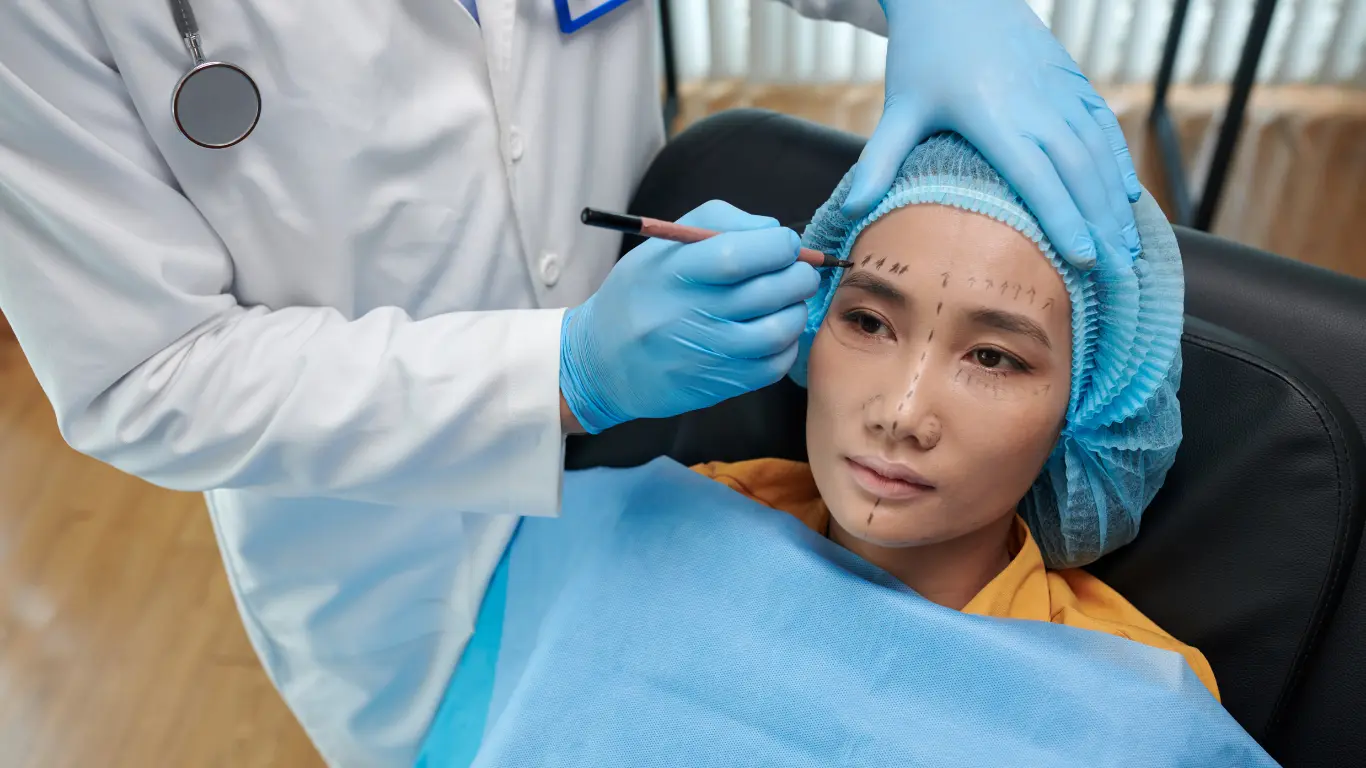
Which Facelift is Right for You?
Choosing between these three procedures depends entirely on your individual concerns and goals. A Deep Plane Facelift offers the most comprehensive, longest-lasting results. A SMAS Facelift restores definition across the mid-face, jawline, and lower face. A Mid Facelift provides precise, subtle rejuvenation for the cheeks alone.
Every journey begins with a personalised consultation. Our expert surgeons will assess your facial structure, discuss your options clearly, and recommend the technique that genuinely fits your needs. We provide thoughtfully guided aftercare, private follow-up appointments, and 24/7 support throughout your recovery.
Deep Plane Facelift
The Gold Standard for Natural, Long-Lasting Rejuvenation
What is a Deep Plane Facelift?
The Deep Plane Facelift is the most advanced facial rejuvenation technique available today. Rather than simply tightening the skin, this method treats ageing at its source. Your surgeon carefully releases the retaining ligaments and repositions the deeper muscle and fat layers (known as the SMAS) as a single, unified structure.
This approach restores the face’s natural foundation and allows for a tension-free result. In simple terms, your expressions stay authentically yours, just beautifully refreshed. Because we lift the deeper structures rather than pulling the skin, you avoid the “stretched” or “windswept” look sometimes associated with older techniques.
Who is it for?
The Deep Plane Facelift is ideal for you if you:
- Feel your face no longer reflects your energy or vitality.
- Want a significant yet completely natural rejuvenation.
- Wish to restore volume to flattened cheeks and soften deep folds without fillers.
- Value expert craftsmanship and results that look elegant up close.
This is not a procedure for dramatic alteration. Instead, it suits individuals who prefer precision over excess and want to preserve their natural identity.
Key benefits:
- Structural restoration: Rebuilds the deeper foundation of the face for a naturally youthful contour.
- Vertical lift: Repositions descended fat pads to recreate a youthful, heart-shaped facial shape.
- Unmatched longevity: Results typically last 10 to 15 years, far exceeding surface-level lifts.
- Invisible work: Discreet incisions and a deep anatomical lift mean no “pulled” appearance.
- Superior jawline definition: Re-sculpts the jawline with exceptional clarity.
Recovery:
The procedure takes around six to eight hours and includes a one-night hospital stay. Because the skin retains its natural blood supply, healing tends to be gentle with reduced bruising. Many patients feel socially comfortable again within two to three weeks, with full recovery taking six to twelve weeks.
Is a Deep Plane Facelift safe?
When performed by a surgeon with specialist expertise in this advanced technique, a Deep Plane Facelift is a safe and predictable procedure. Because the lift occurs at a deeper anatomical level, facial nerve function is carefully protected and natural movement is preserved throughout. During your consultation, your surgeon will carry out a thorough assessment of your health, facial anatomy, and medical history to confirm your suitability before recommending this procedure.
Can a Deep Plane Facelift be combined with other procedures?
Yes. A Deep Plane Facelift can be thoughtfully combined with complementary procedures such as neck lift surgery, eyelid surgery (blepharoplasty), or chin contouring when doing so enhances overall facial harmony. Combining treatments in a single surgical session can also reduce your total recovery time. Your surgeon will assess your facial structure and goals during your consultation and recommend only the combinations that are genuinely appropriate for you.
Will I still look like myself after a Deep Plane Facelift?
Yes. The aim of this procedure is subtle restoration, not transformation. Because the lift occurs at a deeper structural level rather than pulling the skin tight, your expressions and natural facial character are fully preserved. You will look refreshed, rested, and more defined — but still entirely and recognisably yourself.
How long does recovery take after a Deep Plane Facelift?
Most patients notice swelling begin to settle within the first two weeks and feel socially comfortable again within two to three weeks of surgery. Because the skin is not placed under tension during this procedure, post-operative discomfort is generally mild and settles relatively quickly. Full recovery, including the complete resolution of swelling and the refinement of your final results, typically takes between six and twelve weeks.
What happens during a Deep Plane Facelift?
Your surgeon makes discreet incisions around the hairline and ears before carefully releasing the deeper retaining ligaments of the face. The underlying muscle and fat layers are then lifted and repositioned together as a single composite unit. Because the skin is not placed under tension, it drapes naturally over the newly restored structure. The procedure takes approximately six to eight hours and is performed under a general anaesthetic, with a one-night hospital stay.
SMAS Facelift
Restore Definition and Firmness with a Trusted, Modern Technique
What is a SMAS Facelift?
A SMAS facelift focuses on repositioning the deeper facial support layer called the Superficial Musculoaponeurotic System (SMAS). Instead of relying on skin tightening alone, this technique lifts and firms the underlying structure of your face.
By addressing the tissues that shift and descend over time, the SMAS facelift delivers more natural, longer-lasting results while reducing surface tension on the skin. We carefully plan each procedure around your facial anatomy, degree of ageing, and long-term goals. The result is a refreshed, balanced appearance that stays true to how you recognise yourself.
Who is it for?
A SMAS facelift may suit you if you:
- Notice sagging around the jawline, cheeks, or lower face that affects your overall facial balance.
- Want a refreshed appearance that looks natural rather than obviously surgical.
- Value a structured, anatomically driven approach to rejuvenation.
- Prefer results that age well and maintain your facial character over time.
This technique is designed for those who value proportion and stability, not dramatic transformation.
Key benefits:
- Deeper structural lift: Repositions facial tissues that have shifted with age.
- Reduced skin tension: Supports smoother healing and a more natural look.
- Balanced contours: Treats the mid-face, jawline, and lower face together to restore proportion.
- Durable results: Structural support helps your results maintain their form for years.
- Preserved expression: Keeps your natural movement and character intact.
Recovery:
The SMAS facelift typically takes three to four hours, with a one-night hospital stay. A methodical surgical approach supports stable healing. Most patients return to social activities within two to three weeks, and full recovery takes six to twelve weeks.
How is suitability for a SMAS Facelift determined?
Suitability is assessed during a personalised consultation with one of our experienced surgeons. They will carefully evaluate your facial anatomy, the degree and location of your ageing, your skin quality, and your overall medical health. Your personal goals and expectations will also be discussed in detail. Surgery is only recommended when it clearly aligns with your needs and when it is safe to proceed — ensuring that the outcome will be both natural and appropriate for your individual face.
Can a SMAS Facelift be combined with other procedures?
Yes. A SMAS facelift is commonly combined with complementary procedures such as neck lift surgery or eyelid surgery (blepharoplasty) to achieve greater overall facial harmony. Combining treatments within a single surgical session can also reduce your total recovery time. During your consultation, your surgeon will carefully assess your facial anatomy and goals, recommending only the combinations that are genuinely appropriate and safe for you.
How long do SMAS Facelift results last?
The results of a SMAS facelift are long-lasting. Because the procedure addresses the deeper structural layer of the face rather than relying on skin tension alone, the improvements tend to hold their form well over time. Most patients enjoy visible rejuvenation for many years, with results continuing to age naturally alongside the face. Your surgeon will discuss realistic expectations during your consultation, taking into account your facial anatomy and individual healing.
Will a SMAS Facelift look natural?
Yes. Because the procedure works by lifting and repositioning the deeper SMAS layer rather than simply pulling the skin tight, the results are designed to look balanced and entirely natural. Your facial expressions and individual character are preserved throughout. The outcome is a refreshed, more defined appearance that still looks recognisably like you.
How does a SMAS Facelift differ from a Deep Plane Facelift?
Both procedures address the deeper facial structures rather than the skin alone, but they work at different anatomical levels. A SMAS facelift lifts and tightens the SMAS layer directly, making it an excellent choice for those with moderate facial ageing who want natural, long-lasting results. A Deep Plane facelift goes further, releasing the retaining ligaments beneath the SMAS and repositioning the tissues as a single composite unit. This makes it the more advanced option, offering greater vertical lift and longer-lasting results of up to 15 years, but with a longer procedure time and slightly extended recovery. Your surgeon will assess your facial anatomy and degree of ageing during your consultation to determine which approach is the right fit for you.
Mid Facelift
Targeted Cheek Rejuvenation for a Refreshed, Rested Look
What is a Mid Facelift?
A mid facelift is a targeted procedure designed to lift and restore the central portion of your face, particularly the cheeks and mid-face tissues. It addresses the sagging, flattening, and loss of definition that can develop beneath the eyes and across the cheek area.
Unlike a full facelift, a mid facelift concentrates only on this specific region. It works at a deeper structural level, repositioning the underlying tissues to restore natural cheek contour rather than simply tightening the skin. This offers refinement without altering your jawline or neck, giving you a rested appearance that blends seamlessly with the rest of your face.
Who is it for?
A mid facelift is well suited to you if you:
- Feel your cheeks appear heavy, flattened, or tired, especially beneath the eyes.
- Want a targeted lifting approach rather than a full facelift.
- Value precision, balance, and conservative enhancement.
- Prefer results that look natural in everyday life, photographs, and professional settings.
This procedure is intended for those who prioritise subtlety and refined rejuvenation over dramatic change.
Key benefits:
- Targeted mid-face lifting: Addresses sagging and volume loss in the cheeks without affecting the jawline or neck.
- Softer, rested appearance: Improves the transition between the under-eye area and cheeks.
- Natural expression: Lifts the mid-face without changing your eye shape.
- Long-term balance: Prioritises stability and proportion so results age naturally.
Recovery:
The mid facelift takes around two to three hours and is performed as a day case, so you can return home the same day. A structured approach supports steady, predictable healing. Most patients resume social activities within two to three weeks, with full recovery taking six to eight weeks.
How is suitability for a Mid Facelift determined?
Suitability is assessed during a personalised consultation with one of our experienced surgeons. They will carefully evaluate your facial anatomy, the specific location and degree of your ageing, your skin quality, and your overall medical health. Your goals and expectations will also be discussed in full. Because a mid facelift is a targeted procedure focused on the cheeks and mid-face, your surgeon will assess whether your primary concerns sit in this region or whether a broader technique — such as a SMAS or Deep Plane Facelift — would better serve your individual needs. Surgery is only recommended when it is safe to proceed and when the outcome will be genuinely appropriate and natural for your face.
How long do Mid Facelift results last?
The results of a mid facelift are long-lasting and designed to age naturally alongside your facial features. Because the procedure repositions deeper structural tissues rather than relying on surface skin tension, the improvements hold their form well over time. Most patients enjoy sustained cheek definition and a refreshed mid-face appearance for many years following surgery. Your surgeon will discuss realistic expectations during your consultation, taking into account your individual facial anatomy and healing.
What results can patients typically expect after a Mid Facelift?
Most patients notice a visible improvement in cheek definition and a smoother transition between the under-eye area and the mid-face. Flattened or heavy-looking cheeks are lifted and restored to a more youthful contour, and the overall appearance of the face becomes noticeably more rested. Because the procedure works at a deeper structural level, results look natural and settle well into the surrounding facial features. As swelling resolves over the weeks following surgery, the refinement of your outcome will continue to improve, with final results becoming fully apparent after around six to eight weeks.
How does a Mid Facelift differ from a full facelift?
A mid facelift targets only the central portion of the face — primarily the cheeks and the area beneath the eyes — leaving the jawline and neck untreated. A full facelift, such as the SMAS or Deep Plane technique, addresses a broader area including the lower face, jawline, and neck. If your primary concerns sit in the mid-face rather than the lower face, a mid facelift offers a more targeted and less extensive option. Your surgeon will assess where ageing is most visible on your face during your consultation and recommend the approach that is genuinely the best fit for your individual concerns and goals.
Will a Mid Facelift change how my face looks?
The goal of a mid facelift is to restore your cheek position and facial balance, not to alter your identity. Because the procedure works by repositioning deeper tissues rather than tightening the skin, results are designed to look natural and proportionate. You will appear more rested and refreshed, with improved cheek definition and smoother under-eye contours — while still looking entirely like yourself.